
Embedded Systems in Automotive
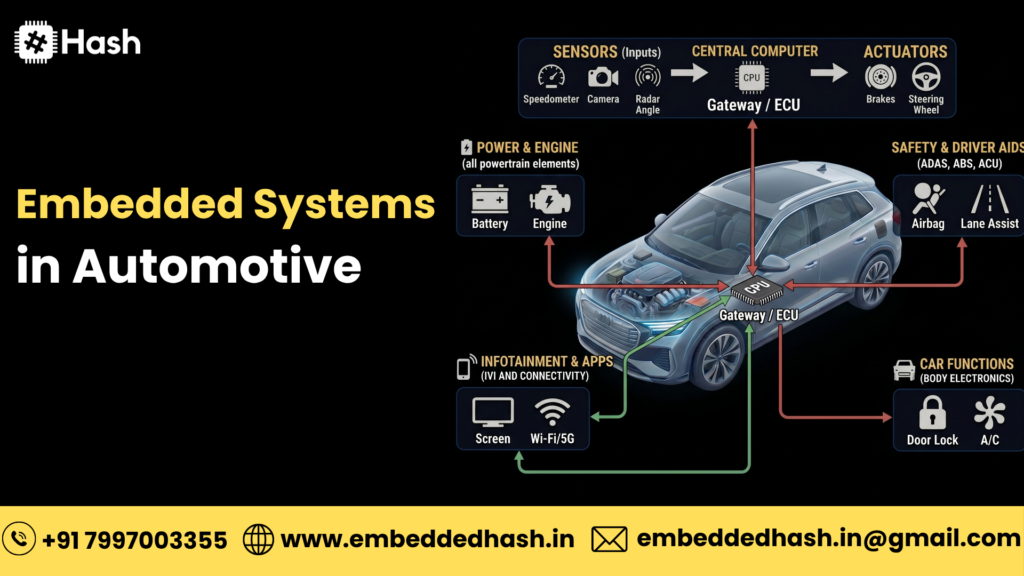
Table of Contents
Embedded Systems in Automotive
Embedded systems in automotive are small computer systems inside vehicles that control important functions like engine performance, braking, safety, and infotainment. They work using sensors, microcontrollers (ECU), and software to monitor data and make real-time decisions. In modern cars, these systems enable features like airbags, ABS, navigation, and driver assistance, making driving safer and more efficient. With the rapid growth of electric vehicles and smart technologies in 2026, embedded systems are becoming essential in the automotive industry. For beginners, understanding these systems is the first step toward building a strong career in this high-demand field.
What Are Embedded Systems in Automotive
Definition
Embedded systems in automotive are small computer units inside vehicles that handle specific tasks like control, monitoring, and automation. For example, when you press the brake, these systems ensure it works correctly. In cars like Tata Nexon or Hyundai Creta, they manage safety and engine functions. Overall, embedded systems quietly improve driving safety, performance, and comfort.
Key Components of Automotive Embedded Systems
- Microcontrollers (ECU):
A microcontroller, also called ECU, acts as the brain of the system. It processes data from sensors and makes quick decisions to control vehicle functions efficiently. - Sensors:
Sensors are hardware components that detect physical changes like temperature, speed, or distance. They collect real-time data from the environment and send it to the ECU for processing. - Actuators:
Actuators are hardware devices that convert signals into physical actions. They help perform tasks like moving motors, controlling fuel injection, or adjusting mechanical parts in vehicles. - Embedded Software / RTOS:
Embedded software or RTOS controls how the system operates in real time. It ensures all components work together smoothly, responding quickly without delays for safe vehicle performance.
Why Are Embedded Systems Important in Automotive
How Do They Improve Vehicle Safety?
- Airbags:
Airbags use embedded systems to detect a crash and instantly deploy, protecting passengers from serious injuries by reducing impact during sudden vehicle collisions effectively. - ABS (Anti-lock Braking System):
ABS uses embedded systems to stop wheels from locking during sudden braking, helping the driver maintain control and avoid skidding on slippery or rough roads. - Collision Detection:
Collision detection systems use sensors and embedded control to identify nearby obstacles early and warn the driver, helping prevent accidents and improve overall road safety.
How Do They Enhance Driving Experience?
- Infotainment Systems:
Infotainment systems use embedded technology to provide music, touchscreen controls, and connectivity features, making driving more enjoyable and keeping passengers entertained during long journeys. - Navigation & GPS:
Navigation systems use embedded software to provide real-time directions, traffic updates, and route guidance, helping drivers reach destinations faster and avoid traffic in busy cities like Hyderabad. - Driver Assistance Features:
Driver assistance features use embedded systems to support functions like parking assist, lane warnings, and alerts, making driving easier, safer, and more comfortable for beginners.
Why Are They Critical for Electric Vehicles (EVs)?
- Battery Management:
Battery management systems use embedded technology to monitor charging, discharging, and temperature, ensuring the battery works safely, lasts longer, and performs reliably in electric vehicles. - Energy Efficiency:
Embedded systems help manage power usage efficiently by optimizing energy flow, reducing losses, and improving driving range, which is very important for daily commuting in electric vehicles.
How Do Embedded Systems in Automotive Work
Embedded systems in automotive work by continuously collecting data, processing it, and taking actions in real time. This helps vehicles respond quickly and operate smoothly in different driving conditions.
What Is the Input–Process–Output Cycle?
The Input–Process–Output cycle is the basic working method of any embedded system. It explains how a system takes information, understands it, and responds.
- Input (Sensors):
Sensors collect data from the environment, such as speed, temperature, or distance. For example, a speed sensor detects how fast a car is moving. - Process (ECU):
The ECU (Electronic Control Unit) receives this data and analyzes it. It decides what action should be taken based on the situation. - Output (Actuators):
Actuators perform the action decided by the ECU. For example, applying brakes or adjusting fuel supply.
Example:
When you press the brake pedal:
Sensor detects → ECU processes → Brake actuator slows the vehicle
How Does an ECU Control Systems?
- Real-Time Processing:
The ECU processes data instantly without delay, allowing the system to respond quickly to changes like braking, acceleration, or obstacles, which is important for safe driving. - Signal Interpretation:
The ECU reads signals from sensors, understands the information, and decides the correct action, helping different vehicle systems work together efficiently and accurately.
What Is RTOS and Why Is It Used?
- RTOS (Real-Time Operating System):
RTOS is software that manages system tasks and ensures quick responses. It helps embedded systems perform multiple operations smoothly without delays, which is critical for automotive safety.
Applications of Embedded Systems in Automotive
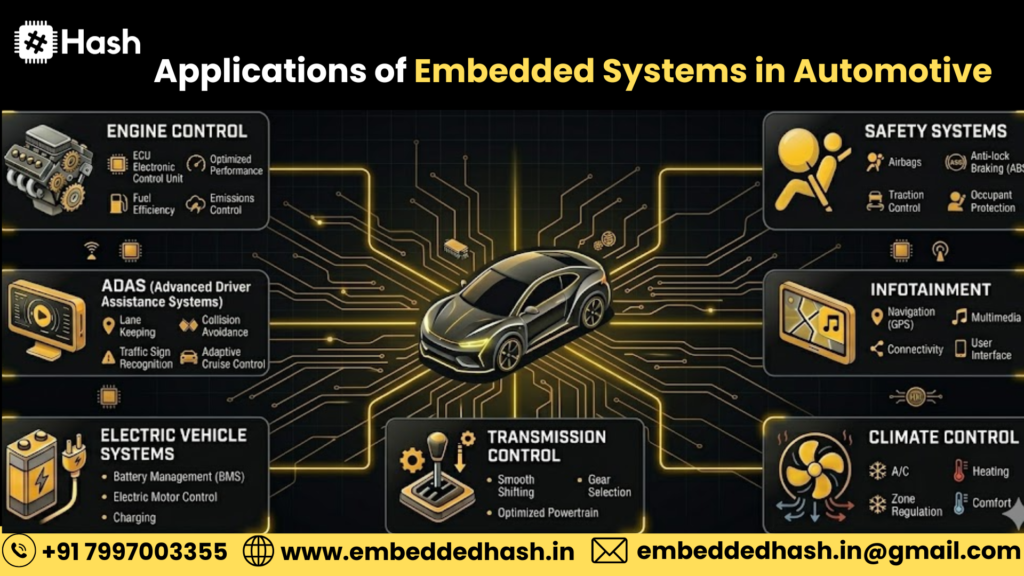
Embedded systems are widely used in modern vehicles to improve safety, performance, and comfort. They control different functions inside the car and help everything work smoothly in real time.
Engine Control Systems
Embedded systems play a key role in controlling how the engine works, ensuring smooth performance, better fuel efficiency, and reduced pollution. These systems continuously monitor engine conditions and make quick adjustments in real time.
- Fuel Injection Control:
The system controls how much fuel is sent to the engine based on speed and load. This helps maintain the right fuel balance, improving mileage and performance. - Ignition Timing:
It ensures the spark plug fires at the correct moment. Proper timing helps the engine run smoothly and prevents power loss or engine knocking. - Emission Control:
Embedded systems monitor and reduce harmful gases released from the engine. This helps vehicles meet pollution standards like BS6 norms in India.
Understanding:
The system constantly checks engine conditions and adjusts fuel, spark, and emissions to keep the engine running efficiently.
Safety Systems
Embedded systems play a vital role in protecting passengers and preventing accidents by responding quickly during critical situations. These systems continuously monitor the vehicle and take action when needed.
- ABS (Anti-lock Braking System):
Prevents the wheels from locking during sudden braking, allowing the driver to maintain control and avoid skidding, especially on wet or slippery roads. - Airbags:
Automatically deploy during a collision to reduce impact on passengers and minimize the risk of serious injuries. - Electronic Stability Control (ESC):
Helps maintain vehicle balance by adjusting braking and engine power, especially during sharp turns or sudden maneuvers.
These safety features are commonly available in Indian cars like Tata Nexon and Hyundai Creta.
Driver Assistance Systems (ADAS)
Embedded systems power ADAS features that make driving easier and safer by supporting the driver in real-time situations. These systems use sensors and cameras to monitor the road and assist when needed.
- Lane Assist:
Detects lane markings and alerts the driver if the vehicle unintentionally moves out of its lane, helping prevent accidents on highways. - Adaptive Cruise Control:
Automatically adjusts the vehicle speed to maintain a safe distance from the vehicle ahead, reducing driver effort during long drives. - Automatic Braking:
Detects potential collisions and applies brakes automatically if the driver does not react in time, helping avoid or reduce the impact of accidents.
Infotainment Systems
Embedded systems power infotainment features that improve comfort, connectivity, and entertainment inside the vehicle. These systems make driving more enjoyable and convenient, especially during long journeys.
- Touchscreens:
Provide an easy interface to control music, calls, settings, and other vehicle functions, making interaction simple and user-friendly. - Navigation (GPS):
Offers real-time directions, traffic updates, and route suggestions, helping drivers reach destinations faster, especially in busy cities like Hyderabad. - Voice Assistants:
Allow drivers to control features using voice commands, enabling hands-free operation and reducing distractions while driving.
Electric Vehicle Systems
Embedded systems are the core of electric vehicles, managing battery performance, charging, and energy usage to ensure safe and efficient operation.
- Battery Management System (BMS):
Monitors battery health, temperature, and charge levels to prevent overheating and extend battery life, ensuring safe and reliable vehicle performance. - Charging Systems:
Controls how the battery is charged, managing voltage and current to ensure safe, efficient, and fast charging without damaging the battery. - Power Optimization:
Optimizes energy usage across the vehicle, reducing power loss and improving driving range, which is important for daily commuting in electric vehicles.
Transmission Control Systems
Embedded systems manage how power from the engine reaches the wheels, ensuring smooth and efficient vehicle movement. They continuously adjust performance based on speed and driving conditions.
- Gear Automation:
Automatically shifts gears based on speed and load, providing smoother driving and reducing the need for manual gear changes, especially useful in city traffic conditions. - Torque Control:
Adjusts the amount of power delivered to the wheels, improving acceleration, stability, and overall driving performance under different road conditions.
Understanding:
These systems ensure the right gear and power are used at the right time for a comfortable and efficient driving experience.
Climate Control Systems
Embedded systems help maintain a comfortable environment inside the vehicle by automatically controlling temperature and airflow based on user settings and outside conditions.
- Smart AC:
Automatically adjusts cooling based on cabin temperature and weather conditions, ensuring consistent comfort without manual changes, especially useful in hot climates like India. - Temperature Regulation:
Maintains the desired cabin temperature by continuously monitoring and adjusting airflow, keeping passengers comfortable during long drives.
What Skills Are Required for Automotive Embedded Systems
Technical Skills
- Embedded C Programming: Write code to control hardware and system functions
- Microcontrollers (ARM, AVR, PIC): Work with hardware used in automotive systems
- CAN Protocol: Understand communication between different vehicle components
Tools & Platforms
- MATLAB: Used for system design and simulation
- Simulink: Helps model and test embedded systems visually
Conclusion
Embedded systems are the backbone of modern vehicles, enabling safety, automation, and smart driving features. From engine control to advanced driver assistance, they play a key role in how vehicles operate today.
With the rapid growth of electric vehicles and smart mobility in 2026, automotive embedded systems are becoming one of the most in-demand career fields in India, especially in tech hubs like Hyderabad.
For beginners, this is the perfect time to start learning and build a strong career in this growing industry.
Frequently Asked Questions
Embedded systems in automotive are small computers inside vehicles that control functions like braking, engine performance, and safety features, helping vehicles operate efficiently, safely, and automatically in real time.
Embedded systems work using sensors, ECU, and actuators. Sensors collect data, ECU processes it, and actuators perform actions, allowing the vehicle to respond quickly and operate smoothly.
They improve safety, performance, and comfort by controlling key functions like braking, engine, and navigation, helping vehicles operate efficiently while reducing risks and enhancing overall driving experience.
ECU (Electronic Control Unit) is the brain of an embedded system that processes sensor data and controls vehicle functions like engine, braking, and safety systems in real time.
Embedded C is the most commonly used programming language in automotive systems because it is efficient, fast, and suitable for controlling hardware and real-time operations in vehicles.
Beginners can start by learning C programming, understanding basic electronics, practicing microcontrollers, and building simple projects to gain practical knowledge and develop skills step by step.
Examples include engine control systems, airbags, ABS, infotainment systems, navigation systems, and driver assistance features, all of which help improve safety, performance, and comfort in vehicles.
Sensors collect data like speed, temperature, and distance from the environment and send it to the ECU, helping the system make decisions and control vehicle functions accurately.
CAN (Controller Area Network) protocol is a communication system that allows different electronic components in a vehicle to exchange data efficiently without using complex wiring systems.
Yes, embedded systems are essential in electric vehicles as they manage battery performance, charging, and energy usage, ensuring safe, efficient, and reliable operation of the vehicle.
Common job roles include embedded engineer, automotive software developer, firmware engineer, and system engineer, offering good career opportunities in automotive and electronics industries in India.
Freshers can earn around ₹3–6 LPA, while experienced engineers can earn ₹8–20 LPA depending on skills, experience, and company, especially in Hyderabad’s growing tech industry.
Key skills include Embedded C programming, microcontrollers, CAN protocol, basic electronics, debugging, and problem-solving abilities, which help in building and managing automotive embedded systems effectively.
Yes, embedded systems is a good career in India due to high demand in automotive, IoT, and electronics industries, offering stable growth, good salaries, and future opportunities.


 embeddedhash.in@gmail.com