
What is Embedded Systems Engineering
Great learning experience at Generative AI Masters! The trainers explain concepts in a simple and practical way with real-world examples. The hands-on projects and supportive guidance made learning Generative AI much easier. I highly recommend this institute to anyone looking to build a career in AI.
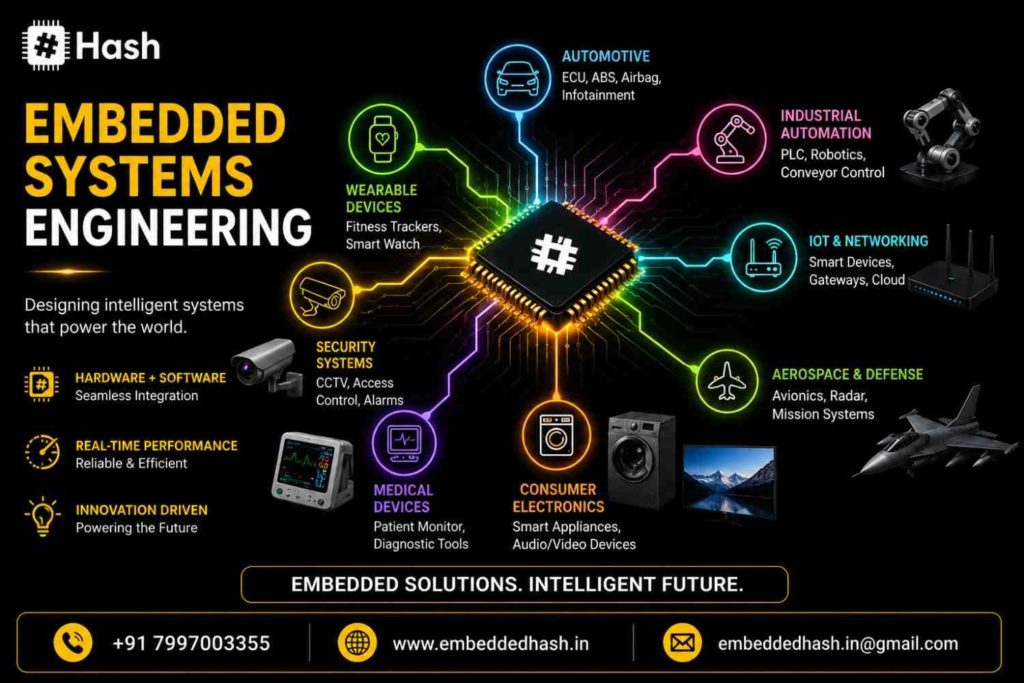
Table of Contents
What is Embedded Systems Engineering? The Complete Guide (2026)
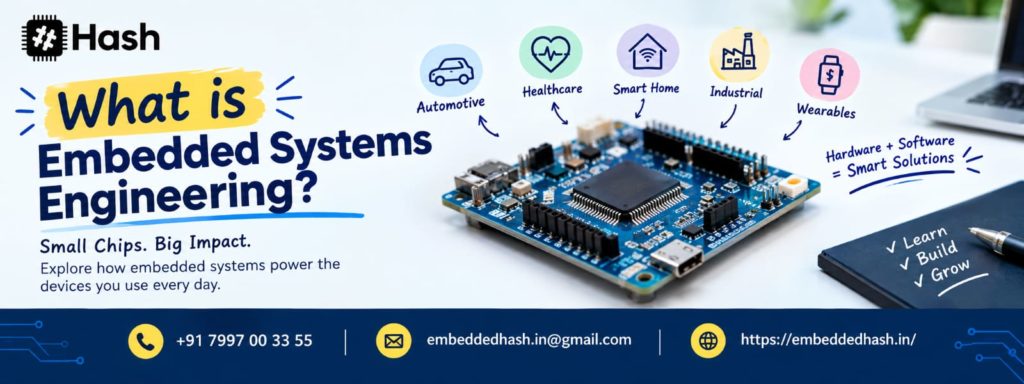
- Embedded technology powers almost every smart device we use today. From smartphones and washing machines to automobiles, satellites, industrial robots, and healthcare equipment, embedded systems work silently behind the scenes to make these devices intelligent, efficient, and reliable.
- As industries rapidly adopt Artificial Intelligence (AI), Internet of Things (IoT), Robotics, Electric Vehicles (EVs), Industrial Automation, and Smart Manufacturing, the demand for skilled embedded engineers continues to grow worldwide.
- Whether you’re a student, engineering graduate, working professional, or someone planning a career in electronics and software, understanding What is Embedded Systems Engineering is the first step toward entering one of today’s fastest-growing technology fields.
- In this complete guide, you’ll learn how embedded systems work, their architecture, hardware and software components, programming languages, career opportunities, salaries in India, industry trends, and the future of Embedded Systems Engineering.
What is Embedded Systems Engineering?
Embedded Systems Engineering is the discipline of designing, developing, programming, testing, and maintaining dedicated computer systems built into larger electronic products.
Unlike general-purpose computers that perform many tasks, embe
Examples include:
- Engine Control Unit (ECU) in cars
- Smart TVs
- ATM machines
- Medical monitoring devices
- Smart home appliances
- Industrial robots
- Flight control systems
- Wearable fitness trackers
An embedded system combines:
- Hardware
- Software
- Firmware
- Communication interfaces
- Sensors and actuators
How Embedded Systems Work
An embedded system follows a simple but powerful workflow.
Input Devices
↓
Sensors
↓
Microcontroller / Processor
↓
Embedded Software
↓
Decision Making
↓
Output Devices
For example:
A smart washing machine:
- Detects water level
- Measures temperature
- Controls motor speed
- Adjusts washing cycle
- Displays information
All these operations are performed automatically by the embedded controller running Embedded C or RTOS-based software.
Most embedded systems process data in milliseconds, making them suitable for real-time applications.
These devices use embedded computing to perform one or more dedicated tasks without requiring user intervention for every operation.
Components of an Embedded System
Every embedded system consists of two major components.
Hardware Components
- Microcontroller
- Microprocessor
- Memory (RAM, ROM, Flash)
- Sensors
- Actuators
- Communication Interfaces
- Power Supply
- PCB
- Clock Circuit
Software Components
- Embedded C Program
- Bootloader
- RTOS
- Device Drivers
- Middleware
- Application Software
Types of Embedded Systems
Refrigerator:Standalone Embedded Systems
Operate independently.
Examples:
- Microwave Oven
- Digital Camera
- Printer
Real-Time Embedded Systems
Respond within strict timing constraints.
Examples:
- Airbags
- ABS Braking Systems
- Medical Equipment
Network Embedded Systems
Connected through wired or wireless communication.
Examples:
- Routers
- IoT Gateways
- Smart Meters
Mobile Embedded Systems
Portable and battery-operated devices.
Examples:
- Smartphones
- Smart Watches
- GPS Devices
Architecture of Embedded Systems
A typical embedded system architecture includes:
Application Layer
↓
Operating System / RTOS
↓
Device Drivers
↓
Hardware Abstraction Layer
↓
Microcontroller / Processor
↓
Sensors & Peripherals
Popular processor architectures include:
- ARM Cortex-M
- ARM Cortex-A
- RISC-V
- AVR
- PIC
- STM32
The architecture depends on application complexity and processing requirements.
Embedded Hardware Components
Hardware forms the foundation of any embedded system.
Microcontrollers
Microcontrollers integrate:
- CPU
- RAM
- Flash Memory
- Timers
- UART
- SPI
- I2C
- ADC
- GPIO
Popular examples:
- STM32
- PIC
- AVR
- ESP32
- NXP LPC Series
Microprocessors
Microprocessors provide higher processing power but require external memory.
Examples:
- ARM Cortex-A
- Raspberry Pi Processor
- Intel Atom
Used in:
- Automotive infotainment
- Embedded Linux systems
- Industrial computers
FPGA
Field Programmable Gate Arrays allow hardware logic to be customized after manufacturing.
Used in:
- Aerospace
- Defense
- Video Processing
- High-Speed Communication
Communication Interfaces
Embedded devices communicate using protocols such as:
- UART
- SPI
- I2C
- CAN Protocol
- USB
- Ethernet
These protocols enable communication between sensors, controllers, displays, and external devices.
Embedded Software Components
Embedded software controls hardware operations.
Major software components include:
Embedded C
The most widely used language for embedded development.
Advantages:
- Fast execution
- Low memory usage
- Hardware access
- Efficient programming
C++
Used for:
- Object-oriented programming
- Automotive software
- Robotics
- Large embedded projects
RTOS (Real-Time Operating System)
RTOS manages:
- Multitasking
- Scheduling
- Interrupt handling
- Resource allocation
Popular RTOS:
- FreeRTOS
- Zephyr
- ThreadX
- VxWorks
- QNX
Embedded Linux
Embedded Linux powers devices requiring advanced operating systems.
Examples:
- Smart TVs
- Networking Devices
- Industrial Automation
- Automotive Infotainment
Developers commonly work with:
- Linux Kernel
- Device Drivers
- Shell Programming
- Buildroot
- Yocto
Embedded Systems vs Microcontrollers
Many beginners confuse these terms.
- A microcontroller is a hardware chip that contains a CPU, memory, and peripherals on a single integrated circuit.
- An embedded system is the complete solution that includes the microcontroller (or microprocessor), software, sensors, communication interfaces, and application-specific hardware.
In other words, the microcontroller is one component of an embedded system—not the entire system.
Table 1: Embedded Systems vs General Purpose Computer
Feature | Embedded System | General Purpose Computer |
Purpose | Dedicated task | Multiple tasks |
Operating System | Optional or RTOS | Windows, Linux, macOS |
Performance | Optimized for specific applications | General computing |
Power Consumption | Very Low | Higher |
Cost | Low to Moderate | Moderate to High |
Examples | ECU, Smart TV, Medical Device | Desktop, Laptop |
Table 2: Microcontroller vs Microprocessor
Feature | Microcontroller | Microprocessor |
Memory | Built-in | External |
Cost | Lower | Higher |
Speed | Moderate | High |
Power Consumption | Low | Higher |
Applications | IoT, Consumer Electronics | Embedded Linux, Computers |
Examples | STM32, AVR, PIC | ARM Cortex-A, Intel Atom |
Embedded Systems vs IoT
Although Embedded Systems and the Internet of Things (IoT) are closely related, they are not the same. An embedded system is a dedicated computing system designed to perform a specific task, while IoT extends embedded systems by connecting them to the internet for communication, monitoring, and remote control.
For example, a digital thermometer is an embedded system because it measures temperature and displays the result. A smart Wi-Fi thermostat is an IoT device because it not only measures temperature but also communicates with cloud platforms, mobile applications, and smart home ecosystems.
Key Differences
Feature
Embedded Systems
IoT
Internet Connectivity
Not Required
Required
Primary Function
Dedicated Control
Connected Smart Devices
Data Sharing
Local
Cloud & Internet
Examples
Washing Machine, Microwave
Smart Home, Smart Agriculture
Communication
UART, SPI, I2C
Wi-Fi, Bluetooth, LTE, MQTT
Today, IoT Embedded Systems are widely used in smart cities, industrial automation, healthcare monitoring, connected vehicles, and wearable devices.
Programming Languages Used in Embedded Systems
Programming is the heart of Embedded Systems Engineering. Engineers use different programming languages depending on the hardware platform and application.
Embedded C
Embedded C remains the most popular language because it provides direct access to hardware registers, excellent performance, and efficient memory utilization.
It is commonly used for:
STM32 Programming
ARM Programming
AVR Programming
PIC Programming
Device Drivers
Industrial Automation
C++
C++ introduces object-oriented programming, making it suitable for complex embedded applications.
Applications include:
Robotics
Automotive Embedded Systems
Medical Devices
Embedded Linux Applications
Python
Python is increasingly used with platforms like Raspberry Pi for rapid prototyping, AI, computer vision, and IoT projects.
Assembly Language
Assembly provides low-level hardware control and is mainly used in bootloaders, firmware optimization, and highly time-critical applications.
Linux Shell Scripting
Engineers working with Embedded Linux use shell scripting for automation, software deployment, debugging, and system configuration.
1. Requirement Analysis
Understand customer needs, performance goals, cost constraints, and system specifications.
2. Hardware Selection
Choose the appropriate:
- Microcontroller
- Processor
- Sensors
- Communication interfaces
- Memory
- Power supply
3. Software Development
Develop firmware using:
- Embedded C
- C++
- RTOS
- Embedded Linux
4. Hardware Integration
Connect hardware peripherals such as sensors, displays, motors, and communication modules.
5. Testing and Debugging
Perform:
- Functional Testing
- Integration Testing
- Performance Testing
- Stress Testing
- Real-Time Validation
Tools such as JTAG debuggers, oscilloscopes, logic analyzers, and protocol analyzers are commonly used.
6. Product Deployment
After successful validation, the embedded product is manufactured, deployed, and maintained through firmware updates.
What is AUTOSAR Architecture in Modern Automotive ECUs?
Modern vehicles contain dozens of Electronic Control Units (ECUs) for:
- Engine Control
- Airbags
- ABS Braking
- Infotainment
- Advanced Driver Assistance Systems (ADAS)
AUTOSAR has become a widely adopted software architecture standard for automotive embedded software development.
Real-Life Applications of Embedded Systems
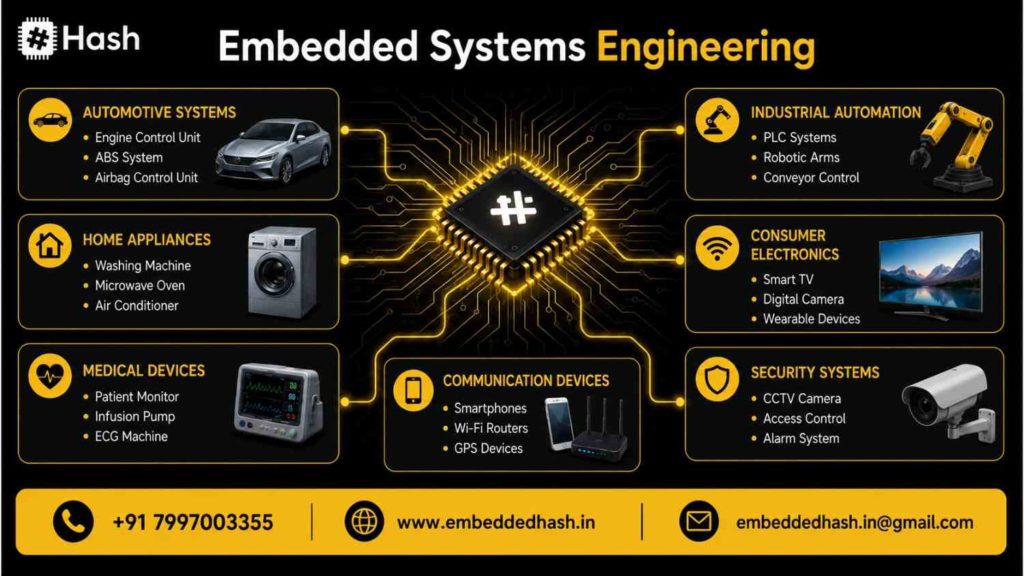
Embedded systems are found in almost every modern industry.
Automotive
Applications include:
- Engine Control Units (ECUs)
- Anti-lock Braking Systems (ABS)
- Airbag Safety Controllers
- Infotainment & Digital Dashboards
- Advanced Driver Assistance Systems (ADAS)
Aerospace
Applications include:
- Flight Control Systems
- Navigation Systems
- Radar
- Satellite Communication
- Drone Control
Reliability and real-time performance are essential in aerospace applications.
Healthcare
Embedded systems power:
- ECG Machines
- MRI Scanners
- Ventilators
- Blood Pressure Monitors
- Patient Monitoring Systems
- Wearable Health Devices
Consumer Electronics
Examples include:
- Smart TVs
- Washing Machines
- Air Conditioners
- Refrigerators
- Digital Cameras
- Gaming Consoles
Robotics
Robots rely on embedded systems for:
- Motion Control
- Sensor Processing
- AI-Based Decision Making
- Machine Vision
Industrial Automation
Embedded controllers improve manufacturing through:
- PLC Integration
- Motor Control
- Factory Automation
- Predictive Maintenance
- Quality Inspection
Telecommunications
Defense
Defense applications include:
- Missile Guidance
- Radar Systems
- Surveillance Equipment
- Secure Communication Devices
Networking Equipment
Networking equipment uses embedded software for:
- Routers
- Switches
- Base Stations
- 5G Infrastructure
IoT
Embedded systems are the foundation of IoT applications such as:
- Smart Agriculture
- Smart Cities
- Connected Vehicles
- Industrial IoT
- Environmental Monitoring
Smart Homes
Examples include:
- Smart Locks
- Smart Lighting
- Voice Assistants
- Smart Thermostats
- Security Cameras
Advantages of Embedded Systems
Embedded systems offer several advantages that make them indispensable across industries.
- High reliability
- Low power consumption
- Compact size
- Faster response time
- Real-time performance
- Cost-effective production
- High efficiency
- Dedicated functionality
- Better security
- Long operational life
These characteristics make embedded systems ideal for mission-critical applications.
Disadvantages of Embedded Systems
Despite their benefits, embedded systems also have some limitations.
- Limited memory
- Limited processing power
- Difficult hardware upgrades
- Application-specific design
- Complex debugging
- Higher development time for safety-critical systems
- Hardware dependency
Proper system design helps minimize these challenges.
Skills Required for Embedded Systems Engineers
To build a successful Embedded Systems Career, aspiring engineers should develop both hardware and software expertise.
Technical Skills
- Embedded C Programming
- C++
- Data Structures
- ARM Programming
- STM32 Programming
- RTOS Programming
- Embedded Linux
- Linux Device Drivers
- Microcontroller Programming
- Digital Electronics
- Analog Electronics
- PCB Fundamentals
- UART
- SPI
- I2C
- CAN Protocol
- Git Version Control
- Debugging Techniques
Soft Skills
- Problem Solving
- Analytical Thinking
- Communication
- Team Collaboration
- Documentation
- Continuous Learning
Career Opportunities in Embedded Systems
As automation and intelligent devices continue to expand, Embedded Systems Engineers are in high demand across industries.
Popular job roles include:
- Embedded Software Engineer
- Embedded Systems Engineer
- Firmware Engineer
- Embedded Linux Engineer
- Linux Device Driver Engineer
- BSP Engineer
- IoT Developer
- Automotive Embedded Engineer
- AUTOSAR Engineer
- Robotics Engineer
- FPGA Design Engineer
- Hardware Design Engineer
- Validation Engineer
- Test Engineer
- System Integration Engineer
- Technical Consultant
Professionals with expertise in Embedded Linux, RTOS, ARM, AUTOSAR, AI, and IoT are especially sought after.
Table 3: Embedded Systems Career Roadmap
Level | Skills to Learn | Typical Job Roles |
Beginner | C Programming, Digital Electronics, Basic Microcontrollers | Trainee Engineer, Intern |
Intermediate | Embedded C, ARM, STM32, UART, SPI, I2C, RTOS | Embedded Software Engineer |
Advanced | Embedded Linux, Device Drivers, CAN Protocol, AUTOSAR, IoT | Senior Embedded Engineer, Linux Engineer |
Expert | AI in Embedded Systems, FPGA, System Architecture, Leadership | Technical Architect, Engineering Manager |
Salary of Embedded Systems Engineers in India
Salaries vary depending on skills, location, industry, and experience. Engineers with expertise in ARM, Embedded Linux, AUTOSAR, and AI-enabled embedded systems often command higher compensation than those with only entry-level firmware skills.
Table 4: Embedded Engineer Salary in India
Experience | Average Annual Salary |
Freshers (0–2 Years) | ₹3.5–6 LPA |
2–5 Years | ₹6–12 LPA |
5–10 Years | ₹12–22 LPA |
10+ Years | ₹22–40+ LPA |
Salaries may be higher in technology hubs such as Bengaluru, Hyderabad, Pune, Chennai, and Noida, particularly in semiconductor, automotive, and product-based companies.
Top Companies Hiring Embedded Engineers
Leading organizations that regularly hire Embedded Systems professionals include:
- Qualcomm
- Intel
- NVIDIA
- AMD
- Bosch
- Continental
- Tata Elxsi
- HCLTech
- Wipro
- Tata Consultancy Services (TCS)
- Infosys
- Capgemini
- Honeywell
- Siemens
These companies recruit engineers for domains such as automotive electronics, industrial automation, semiconductor design, networking, consumer electronics, aerospace, healthcare technology, and IoT.
Latest Trends in Embedded Systems
Embedded Systems Engineering is evolving rapidly as industries embrace intelligent, connected, and autonomous technologies. Some of the most significant trends shaping the field include:
AI in Embedded Systems
Artificial Intelligence (AI) is increasingly being integrated into embedded devices, enabling them to make decisions locally without relying entirely on cloud computing. AI-powered embedded systems are used in:
- Autonomous vehicles
- Smart surveillance cameras
- Voice assistants
- Predictive maintenance
- Medical diagnostics
- Industrial robots
TinyML (Machine Learning on microcontrollers) is also gaining popularity, allowing AI models to run on low-power embedded devices.
Edge Computing
Instead of sending all data to the cloud, edge computing processes information directly on embedded devices. This reduces latency, improves privacy, and enables real-time decision-making.
Examples include:
- Smart factories
- Industrial IoT
- Autonomous drones
- Smart traffic systems
Automotive Embedded Systems
The automotive industry is undergoing a massive transformation with the rise of:
- Electric Vehicles (EVs)
- Advanced Driver Assistance Systems (ADAS)
- Autonomous driving
- Vehicle-to-Vehicle (V2V) communication
Standards such as AUTOSAR continue to play a vital role in developing reliable and secure automotive software.
Embedded Linux Growth
Embedded Linux has become the preferred operating system for high-performance embedded devices such as:
- Smart TVs
- Medical equipment
- Industrial gateways
- Networking devices
- Automotive infotainment systems
Knowledge of Linux Kernel development, Device Drivers, Buildroot, and Yocto Project is increasingly valuable.
Industry 4.0 and Smart Manufacturing
Factories are adopting embedded systems for:
- Predictive maintenance
- Machine monitoring
- Automated production lines
- Robotics
- Quality inspection
This transformation is driving demand for engineers skilled in Industrial Automation and IoT.
Future Scope of Embedded Systems Engineering
The future of Embedded Systems Engineering is exceptionally promising. As more devices become connected and intelligent, the need for embedded professionals will continue to increase.
Key growth areas include:
- Electric Vehicles (EVs)
- Semiconductor Manufacturing
- Consumer Electronics
- Medical Devices
- Smart Cities
- Defense Systems
- Aerospace Technologies
- Industrial Automation
- Robotics
- AI-powered IoT Devices
India is also investing heavily in semiconductor manufacturing, electronics production, and digital transformation. Government initiatives such as Digital India, Make in India, and semiconductor incentive programs are creating new opportunities for embedded engineers.
According to industry reports, the global embedded systems market is expected to continue growing steadily over the coming years, driven by the increasing adoption of connected devices, AI, automotive electronics, and industrial automation.
Why Embedded Systems Engineering is One of the Best Career Choices in India
Embedded Systems Engineering offers an excellent career path for students interested in electronics, programming, and innovation.
High Demand Across Industries
Almost every sector requires embedded engineers, including:
- Automotive
- Aerospace
- Healthcare
- Consumer Electronics
- Robotics
- Telecommunications
- Industrial Automation
- Defense
- IoT
- Smart Homes
Attractive Salary Growth
Professionals who specialize in ARM programming, Embedded Linux, AUTOSAR, RTOS, AI, and FPGA development often experience strong salary growth as they gain experience.
Diverse Career Opportunities
Embedded engineers can work as:
- Embedded Software Engineers
- Firmware Engineers
- Linux Engineers
- IoT Developers
- Automotive Engineers
- Robotics Engineers
- BSP Engineers
- Device Driver Developers
- FPGA Engineers
- System Architects
Global Opportunities
Embedded Systems skills are in demand not only in India but also in countries such as Germany, the United States, Canada, Japan, South Korea, and Singapore, where automotive, semiconductor, aerospace, and industrial automation industries are expanding.
How to Become an Embedded Systems Engineer
If you’re planning a career in Embedded Systems Engineering, follow this roadmap:
Step 1: Build a Strong Foundation
Learn:
- C Programming
- C++
- Digital Electronics
- Basic Electronics
- Computer Architecture
Step 2: Master Microcontrollers
Gain practical experience with:
- STM32
- ARM Cortex-M
- AVR
- PIC
- Arduino
- Raspberry Pi
Step 3: Learn Communication Protocols
Understand how embedded devices communicate using:
- UART
- SPI
- I2C
- CAN Protocol
- USB
- Ethernet
Step 4: Learn RTOS
Study concepts such as:
- Task Scheduling
- Interrupt Handling
- Synchronization
- Memory Management
Practice using FreeRTOS or Zephyr.
Step 5: Learn Embedded Linux
Develop skills in:
- Linux Commands
- Shell Scripting
- Linux Kernel Basics
- Device Drivers
- Buildroot
- Yocto Project
Step 6: Build Real Projects
Hands-on experience is essential. Consider projects such as:
- Smart Home Automation
- Weather Monitoring System
- IoT-based Smart Irrigation
- Home Security System
- Line Following Robot
- Smart Energy Meter
- Industrial Monitoring System
Step 7: Create a Professional Portfolio
Showcase your:
- GitHub repositories
- Project reports
- PCB designs
- Firmware code
- Technical blogs
- Certifications
A strong portfolio can significantly improve your chances of securing interviews.
Internal Linking Suggestions
Use the following anchor texts to improve your website’s SEO and user experience:
Anchor Text | Suggested Destination |
Embedded Systems Course | Course page |
Embedded C Training | Embedded C course page |
Embedded Linux Course | Linux training page |
IoT Training | IoT course page |
Embedded Systems Career Guide | Career-focused blog |
Best Embedded Systems Institute in Hyderabad | Homepage or institute page |
Recommended External References
Link to authoritative resources to strengthen EEAT signals:
- Microsoft – Azure IoT and Embedded Development
- ARM – ARM Cortex Architecture Documentation
- STMicroelectronics – STM32 Documentation
- NXP Semiconductors – Embedded Solutions
- Texas Instruments – Embedded Processors & Microcontrollers
- IEEE – Embedded Systems Research Publications
- Linux Foundation – Embedded Linux Learning Resources
Frequently Asked Questions
Embedded Systems Engineering is the design and development of dedicated computing systems that perform specific tasks within electronic devices. It combines hardware, firmware, and software to create reliable and efficient products.
Yes. With increasing demand in automotive, IoT, healthcare, semiconductor, robotics, and industrial automation sectors, Embedded Systems Engineering is one of the fastest-growing technology careers in India.
Embedded C is the most widely used language. C++, Python, and Assembly Language are also used depending on the application and hardware platform.
An embedded system performs a dedicated function, while IoT connects embedded devices to the internet for communication, monitoring, and remote management.
A Real-Time Operating System (RTOS) manages tasks, scheduling, memory, and interrupts to ensure applications respond within strict timing requirements.
Popular platforms include STM32, ARM Cortex-M, AVR, PIC, ESP32, Arduino, and Raspberry Pi (for embedded Linux and prototyping).
Automotive, aerospace, healthcare, consumer electronics, robotics, telecommunications, industrial automation, defense, IoT, and smart home companies all hire embedded engineers.
Key skills include Embedded C, C++, ARM programming, RTOS, Embedded Linux, communication protocols (UART, SPI, I2C, CAN), debugging, and microcontroller programming.
Entry-level engineers typically earn ₹3.5–6 LPA, while experienced professionals with expertise in Embedded Linux, AUTOSAR, and AI can earn ₹20 LPA or more.
Top recruiters include Qualcomm, Intel, NVIDIA, AMD, Bosch, Continental, Tata Elxsi, HCLTech, Wipro, TCS, Infosys, Capgemini, Honeywell, and Siemens.
Key Takeaways
- Embedded Systems Engineering powers everything from smart home devices to aerospace and automotive systems.
- Strong skills in Embedded C, ARM, RTOS, Embedded Linux, and communication protocols are essential for a successful career.
- The demand for embedded engineers is growing due to AI, IoT, Industry 4.0, electric vehicles, and semiconductor expansion.
- Practical projects, certifications, and hands-on training significantly improve employability.
- India offers excellent career opportunities with competitive salaries and global demand for embedded systems professionals.
Conclusion
- Embedded Systems Engineering is at the core of modern technology, enabling intelligent, reliable, and efficient devices across industries such as automotive, healthcare, aerospace, industrial automation, consumer electronics, and IoT. As innovations in AI, Embedded Linux, electric vehicles, robotics, and smart manufacturing continue to accelerate, the demand for skilled embedded engineers is expected to remain strong for years to come.
- Whether you’re a student, recent graduate, or working professional looking to transition into a high-growth technology domain, now is an excellent time to start learning Embedded Systems Engineering. Build a solid foundation in Embedded C, ARM programming, STM32, RTOS, Embedded Linux, and real-world projects to prepare for rewarding career opportunities.
- If you’re looking for structured learning with hands-on experience, industry-oriented projects, and placement support, consider enrolling in an Embedded Systems Course from a reputable training provider. The right guidance and practical exposure can help you build the skills needed to launch a successful career as an Embedded Systems Engineer.


 embeddedhash.in@gmail.com