
Future Scope of Embedded Systems in India
The future scope of embedded systems in India is expanding rapidly due to advancements in IoT, AI, electric vehicles, robotics, and semiconductor manufacturing. Industries such as automotive, healthcare, consumer electronics, aerospace, and industrial automation are actively hiring embedded engineers. With strong government support and increasing digital transformation, embedded systems offer excellent career growth, competitive salaries, and long-term opportunities in India.
Table of Contents
Future Scope of Embedded Systems in India
- The future scope of embedded systems in India has become one of the most discussed topics among engineering students and technology professionals. As industries continue to adopt automation, connected devices, artificial intelligence, and smart technologies, embedded systems are becoming the backbone of modern innovation.
- Embedded systems are specialized computing systems designed to perform specific tasks within larger devices. From smartphones and smartwatches to medical equipment and electric vehicles, embedded technology powers countless applications used every day.
- India’s rapidly growing electronics manufacturing sector, semiconductor initiatives, and increasing demand for IoT-enabled solutions are creating substantial opportunities for embedded system professionals. As a result, embedded systems are emerging as one of the most promising career paths for aspiring engineers in 2026 and beyond.
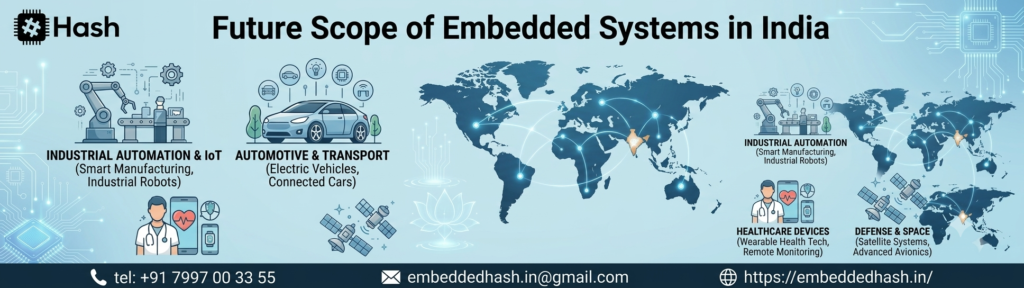
What Are Embedded Systems?
Embedded systems are dedicated computer systems designed to perform specific functions within electronic devices. Unlike general-purpose computers, embedded systems are optimized for particular tasks and are integrated directly into hardware products.
Key Components of Embedded Systems
Embedded systems consist of both hardware and software components that work together to perform specific functions efficiently. Understanding these components is essential for anyone interested in the future scope of embedded systems in India.
1. Microcontrollers
A microcontroller is the brain of an embedded system. It integrates a processor, memory, and input/output peripherals into a single chip. Microcontrollers are designed to control specific operations within electronic devices.
Examples:
- Arduino
- STM32
- PIC Microcontrollers
- AVR Microcontrollers
Applications:
- Smart home devices
- Washing machines
- Traffic control systems
- Medical equipment
2. Microprocessors
Microprocessors are powerful processing units used in applications that require high computational capabilities. Unlike microcontrollers, they usually require external memory and peripherals.
Examples:
- Intel Processors
- ARM Cortex Processors
- AMD Processors
Applications:
- Smartphones
- Tablets
- Industrial automation systems
- Automotive infotainment systems
3. Sensors
Sensors collect data from the environment and convert physical parameters into electrical signals that embedded systems can process.
Types of Sensors:
- Temperature Sensors
- Motion Sensors
- Pressure Sensors
- Humidity Sensors
- Proximity Sensors
Applications:
- Smart watches
- Healthcare monitoring devices
- Autonomous vehicles
- Smart agriculture systems
4. Memory Units
Memory stores the instructions and data required for the operation of embedded systems. Different types of memory are used depending on application requirements.
Types of Memory:
- RAM (Random Access Memory)
- ROM (Read-Only Memory)
- Flash Memory
- EEPROM
Functions:
- Store program code
- Save temporary data
- Retain system configurations
5. Communication Interfaces
Communication interfaces enable embedded devices to exchange information with other devices and networks.
Common Communication Protocols:
- UART
- SPI
- I2C
- CAN
- Ethernet
- Bluetooth
- Wi-Fi
Applications:
- IoT devices
- Industrial control systems
- Automotive electronics
- Wireless communication systems
6. Embedded Software
Embedded software is a specialized program that controls the operation of hardware components and ensures the system performs its intended function.
Responsibilities:
- Device control
- Data processing
- User interaction
- Hardware communication
Programming Languages Used:
- C
- C++
- Python
- Assembly Language
7. Real-Time Operating Systems (RTOS)
An RTOS is designed to execute tasks within strict timing constraints. It ensures critical operations are completed within specified deadlines.
Popular RTOS Platforms:
- FreeRTOS
- VxWorks
- QNX
- RTLinux
Applications:
- Aerospace systems
- Medical devices
- Industrial automation
- Automotive safety systems
Common Examples of Embedded Systems
Embedded systems are everywhere in modern life, powering devices across various industries.
Smartphones
Modern smartphones use embedded systems to manage communication, camera functions, touchscreens, GPS, and applications. Embedded processors ensure smooth performance and efficient power management.
Smart TVs
Smart TVs utilize embedded systems to handle video processing, internet connectivity, streaming services, voice commands, and user interfaces.
Washing Machines
Embedded controllers automate washing cycles, water level management, temperature control, and energy optimization, making household appliances smarter and more efficient.
Medical Devices
Medical equipment relies on embedded systems for accurate monitoring, diagnostics, and treatment.
Examples:
- ECG Machines
- Blood Glucose Monitors
- MRI Scanners
- Patient Monitoring Systems
Industrial Robots
Industrial robots use embedded systems to perform precise manufacturing tasks, quality inspections, assembly operations, and automated material handling.
Benefits:
- Increased productivity
- Improved accuracy
- Reduced operational costs
Automotive Control Systems
Modern vehicles contain dozens of embedded systems responsible for critical functions.
Applications:
- Engine Control Units (ECUs)
- Airbag Systems
- ABS Braking Systems
- Navigation Systems
- Advanced Driver Assistance Systems (ADAS)
Smart Home Devices
Smart home technology heavily depends on embedded systems for automation and connectivity.
Examples:
- Smart Thermostats
- Smart Lights
- Smart Door Locks
- Smart Security Cameras
- Voice Assistants
As India continues to invest in IoT, electric vehicles, robotics, semiconductor manufacturing, and Industry 4.0 technologies, demand for professionals skilled in these embedded system components and applications is expected to grow significantly in the coming years.
Why Embedded Systems Are a High-Demand Career in India
Several factors are driving the demand for embedded system professionals across India.
Growth of IoT
The Internet of Things (IoT) is connecting billions of devices worldwide. Every connected device requires embedded hardware and software for communication and functionality.
Rise of Electric Vehicles
Electric vehicles depend heavily on embedded controllers, battery management systems, and advanced driver-assistance technologies.
Expansion of Semiconductor Manufacturing
India is investing heavily in semiconductor fabrication and electronics manufacturing, creating significant demand for embedded engineers.
Industry 4.0 Adoption
Manufacturing industries are increasingly using automation, robotics, and smart factories that rely on embedded technologies.
Embedded Systems Career Opportunities in India
The embedded systems field offers a wide range of career opportunities.
Popular Job Roles
- Embedded Software Engineer
- Firmware Engineer
- Embedded Linux Developer
- Hardware Design Engineer
- IoT Engineer
- Robotics Engineer
- Automotive Embedded Engineer
- Device Driver Developer
- Systems Engineer
- Validation Engineer
Industries Hiring Embedded Engineers
Automotive Industry
Modern vehicles rely on embedded systems for engine control, navigation, safety systems, and autonomous features.
Consumer Electronics
Smartphones, televisions, wearables, and home appliances all require embedded technologies.
Healthcare
Medical devices such as patient monitors, diagnostic equipment, and wearable health trackers use embedded systems.
Aerospace and Defense
Aircraft control systems, surveillance systems, and military communication devices depend on embedded technologies.
Telecommunications
5G infrastructure and networking equipment require embedded engineering expertise.
Industrial Automation
Factories increasingly use embedded controllers and robotics for production efficiency.
Top Companies Hiring Embedded Engineers in India
The demand for embedded engineers in India is growing rapidly as organizations invest in smart devices, automotive electronics, industrial automation, semiconductor development, and IoT technologies. Leading multinational corporations and Indian technology companies actively recruit embedded system professionals for software development, firmware engineering, hardware design, testing, and system integration roles.
Technology Companies Intel
Intel is one of the world’s leading semiconductor manufacturers and a major employer of embedded engineers in India. The company develops processors, edge computing solutions, AI-enabled hardware, and IoT platforms that rely heavily on embedded technologies.
Roles Offered:
- Embedded Software Engineer
- Firmware Engineer
- Validation Engineer
- System Software Developer
Key Skills Required:
- Embedded C/C++
- Linux
- Device Drivers
- Processor Architecture
Qualcomm
Qualcomm is a global leader in wireless communication technologies and mobile processors. Embedded engineers at Qualcomm work on smartphone chipsets, 5G technologies, automotive solutions, and IoT devices.
Roles Offered:
- Embedded Systems Engineer
- Firmware Developer
- Software Test Engineer
- Wireless Protocol Engineer
Key Skills Required:
- ARM Architecture
- Embedded Linux
- Communication Protocols
- Real-Time Systems
NXP Semiconductors
NXP specializes in automotive electronics, secure connectivity, and embedded processing solutions. The company offers excellent career opportunities for engineers interested in automotive and industrial embedded systems.
Roles Offered:
- Embedded Application Engineer
- Automotive Software Engineer
- Firmware Engineer
- Systems Validation Engineer
Texas Instruments
Texas Instruments develops analog and embedded processing products used across industries. Embedded engineers contribute to microcontroller development, power management systems, and industrial automation solutions.
Key Areas:
- Microcontrollers
- Signal Processing
- Industrial Automation
- Automotive Electronics
AMD
AMD develops advanced processors and computing technologies. Embedded professionals at AMD work on firmware development, hardware-software integration, and performance optimisation for computing platforms.
Opportunities Include:
- Embedded Development
- Hardware Validation
- Platform Engineering
- Firmware Testing
Indian Technology Firms
Tata Elxsi
Tata Elxsi is one of India’s most recognized companies in embedded product design and engineering services. It works extensively in automotive, healthcare, media, and telecommunications sectors.
Why Work Here?
- Exposure to cutting-edge embedded technologies
- Strong focus on automotive electronics
- Opportunities in AI and IoT integration
Popular Roles:
- Embedded Engineer
- Automotive Software Developer
- Embedded Testing Engineer
Wipro
Wipro provides engineering and R&D services for global clients. Embedded engineers contribute to projects involving IoT, industrial automation, automotive software, and consumer electronics.
Key Domains:
- Smart Manufacturing
- IoT Solutions
- Automotive Systems
- Healthcare Devices
Infosys
Infosys has expanded its engineering services division significantly, creating opportunities for embedded engineers in digital transformation and connected technology projects.
Work Areas:
- IoT Development
- Edge Computing
- Smart Devices
- Industrial Automation
HCL Technologies
HCL Technologies offers embedded engineering services across multiple sectors including aerospace, automotive, telecommunications, and healthcare.
Key Opportunities:
- Firmware Development
- Embedded Linux Engineering
- Device Driver Development
- Product Testing
Tech Mahindra
Tech Mahindra focuses on telecommunications, connected vehicles, IoT solutions, and next-generation embedded technologies.
Specialization Areas:
- 5G Networks
- Automotive Electronics
- Connected Devices
- Smart Infrastructure
Automotive Companies
Bosch
Bosch is one of the largest recruiters of embedded engineers in India. The company develops automotive electronics, industrial automation systems, and smart mobility solutions.
Embedded Applications:
- Engine Control Units (ECUs)
- Advanced Driver Assistance Systems (ADAS)
- Vehicle Safety Systems
- Electric Vehicle Technology
Continental
Continental develops intelligent transportation technologies and automotive electronics. Embedded engineers contribute to software-defined vehicles and autonomous driving systems.
Career Areas:
- Automotive Embedded Software
- Sensor Technologies
- Vehicle Communication Systems
- Autonomous Driving Solutions
Tata Motors
Tata Motors is investing heavily in electric vehicles and smart mobility solutions. Embedded professionals play a crucial role in vehicle control systems and connected car technologies.
Opportunities Include:
- EV Battery Management Systems
- Vehicle Diagnostics
- Telematics
- Embedded Vehicle Software
Mahindra Electric
Mahindra Electric focuses on sustainable transportation and electric mobility. Embedded engineers work on battery technologies, power electronics, and vehicle automation systems.
Key Technologies:
- Battery Management Systems
- Powertrain Control
- Vehicle Connectivity
- Smart Charging Systems
Hyundai Mobis
Hyundai Mobis develops automotive electronics, safety systems, and intelligent vehicle technologies. The company offers strong opportunities for embedded engineers interested in next-generation mobility solutions.
Focus Areas:
- Automotive Electronics
- Infotainment Systems
- Safety Technologies
- Autonomous Driving Components
Why These Companies Matter for Embedded Engineers
These organizations are shaping the future of embedded technology through innovations in artificial intelligence, IoT, electric vehicles, smart manufacturing, and semiconductor development. For aspiring professionals, securing a role in one of these companies can provide access to cutting-edge projects, global career opportunities, competitive salaries, and long-term growth in the embedded systems industry. As the future scope of embedded systems in India continues to expand, these companies are expected to remain among the top employers of embedded engineering talent.
Embedded Systems Roles and Responsibilities
An embedded engineer performs multiple tasks throughout product development.
Key Responsibilities
- Designing embedded software solutions
- Developing firmware
- Programming microcontrollers
- Testing and debugging systems
- Integrating hardware and software
- Optimizing system performance
- Maintaining embedded products
Embedded Engineer Salary in India
Salary varies depending on skills, experience, and industry.
Experience Level | Average Annual Salary |
Fresher (0–2 Years) | ₹3.5 LPA – ₹7 LPA |
Mid-Level (3–5 Years) | ₹7 LPA – ₹12 LPA |
Senior (6–10 Years) | ₹12 LPA – ₹20 LPA |
Lead/Architect (10+ Years) | ₹20 LPA – ₹40+ LPA |
Skills Required to Become an Embedded Engineer
Programming Skills
- C Programming
- C++
- Embedded C
- Python
Hardware Skills
- Microcontrollers
- Microprocessors
- ARM Architecture
- PCB Design
Software Skills
- Embedded Linux
- RTOS
- Device Drivers
- Debugging Tools
Communication Protocols
- UART
- SPI
- I2C
- CAN
- Ethernet
Tools Every Embedded Engineer Should Learn
Development Tools
- Keil IDE
- MPLAB
- STM32CubeIDE
- Visual Studio Code
Simulation Tools
- Proteus
- MATLAB
- Simulink
Debugging Tools
- JTAG Debuggers
- Logic Analyzers
- Oscilloscopes
Embedded Systems Career Path
Career Stage | Focus Area |
Beginner | C Programming, Microcontrollers |
Intermediate | Embedded Linux, RTOS, Protocols |
Advanced | IoT, Automotive Systems, Firmware |
Expert | Architecture Design, AI Integration, Leadership |
Certifications That Boost Embedded Systems Careers
Recommended Certifications
- Embedded Systems Certification
- Embedded Linux Certification
- ARM Architecture Training
- IoT Professional Certification
- RTOS Certification
- Automotive Embedded Systems Certification
Future Scope of Embedded Systems in India
The future scope of embedded systems in India is exceptionally promising due to technological advancements and government initiatives.
IoT Expansion
Smart homes, smart cities, and industrial IoT are driving demand for embedded technologies.
Electric Vehicle Revolution
India’s EV market continues to expand, creating opportunities for embedded software and hardware engineers.
Semiconductor Growth
Government-backed semiconductor projects are expected to generate thousands of engineering jobs.
Artificial Intelligence Integration
AI-enabled embedded systems are becoming increasingly common in healthcare, manufacturing, and automotive sectors.
Robotics and Automation
Industrial automation and robotics will require highly skilled embedded professionals in the coming years.
5G and Edge Computing
The rollout of 5G networks is accelerating the development of connected devices powered by embedded systems.
Why Embedded Systems Is One of the Best Engineering Careers in India
Strong Industry Demand
Organizations across multiple sectors require embedded engineering expertise.
Diverse Career Opportunities
Professionals can work in automotive, healthcare, aerospace, robotics, and consumer electronics.
Competitive Salaries
Specialized embedded skills command attractive salary packages.
Continuous Innovation
The field offers opportunities to work on cutting-edge technologies.
Global Career Potential
Embedded system skills are recognized and valued worldwide.
Key Takeaways
- Embedded systems are essential for IoT, AI, robotics, and smart devices.
- India’s semiconductor and electronics sectors are creating significant job opportunities.
- Embedded engineers are in demand across automotive, healthcare, aerospace, and manufacturing industries.
- Learning C, C++, Embedded Linux, RTOS, and communication protocols can boost career prospects.
- The future scope of embedded systems in India remains highly promising through 2030 and beyond.
Frequently Asked Questions
The future scope is excellent due to growth in IoT, EVs, automation, and semiconductor manufacturing.
Yes, it offers strong job opportunities, competitive salaries, and long-term growth.
Salaries typically range from ₹3.5 LPA for freshers to ₹40+ LPA for experienced professionals.
Automotive, healthcare, aerospace, consumer electronics, telecommunications, and manufacturing.
C, C++, Embedded C, and Python are commonly used.
Yes, Embedded Linux is widely used in industrial and commercial applications.
Yes, ECE graduates are among the most preferred candidates for embedded roles.
Embedded Systems, Embedded Linux, ARM, IoT, and RTOS certifications are beneficial.
Yes, EVs depend heavily on embedded technologies for control and monitoring systems.
Start with C programming, microcontrollers, basic electronics, and communication protocols.
Conclusion
- The Future Scope of Embedded Systems in India is brighter than ever as industries increasingly rely on smart devices, connected systems, automation, artificial intelligence, and semiconductor technologies. From electric vehicles and healthcare equipment to industrial automation and consumer electronics, embedded systems continue to drive innovation across every major sector.
- With growing government investments, expanding electronics manufacturing, and rising demand for skilled engineers, embedded systems offer excellent career opportunities, competitive salaries, and long-term professional growth. If you are looking to build a future-proof technology career, now is the ideal time to develop embedded systems skills and take advantage of the vast opportunities emerging across India. click here


 embeddedhash.in@gmail.com